Modo: Daily planner
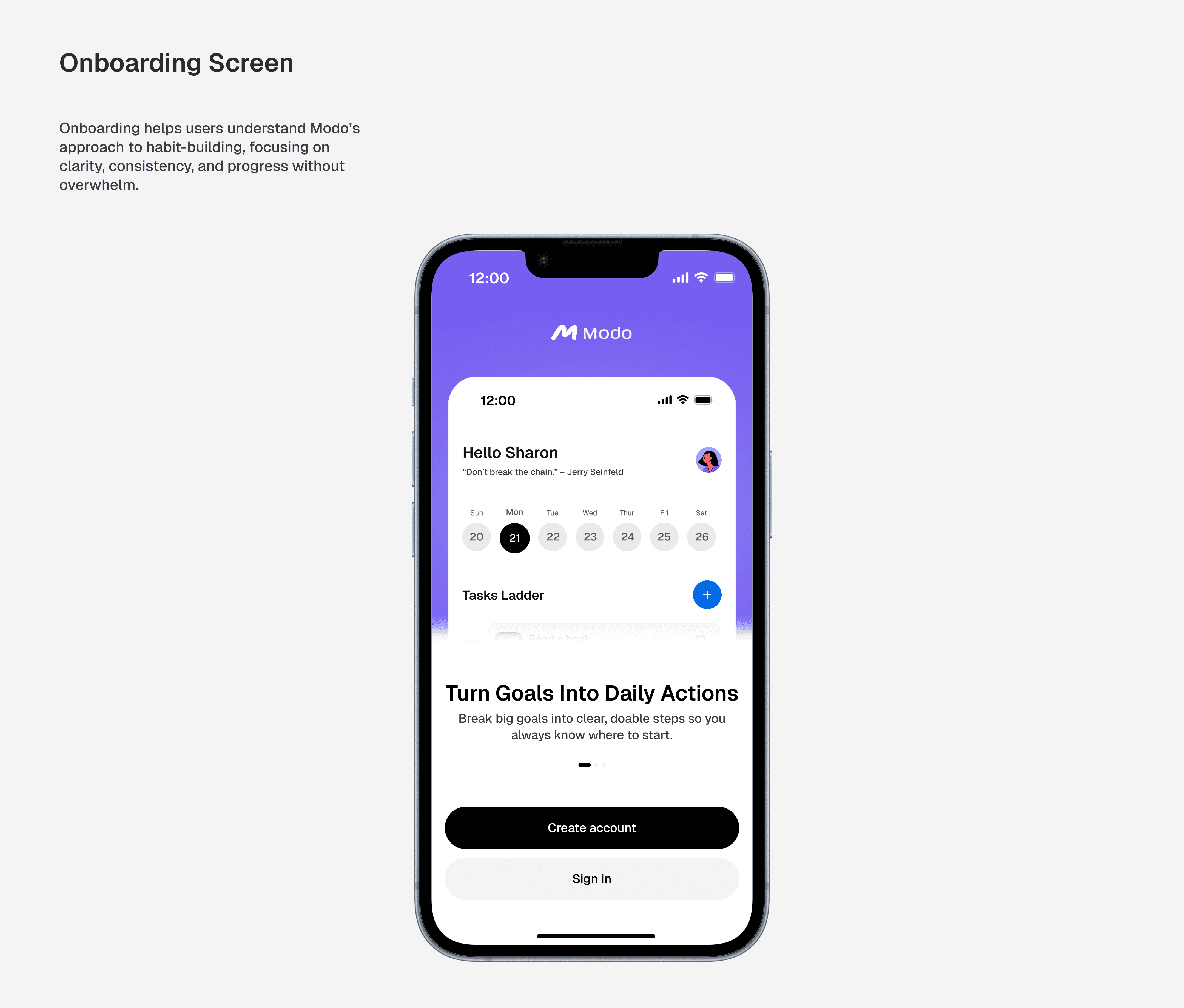
Modo is a habit tracker and daily planner that turns everyday routines into intentional actions. Built on the idea that consistency in small habits creates big results, Modo helps users stay organized, stay motivated, and stay on track — one step at a time. This design explores how structure, motivation, and focus can come together in a clean, simple mobile experience.
Deliverables
/Design System / Mobile screens / User Research Summary
Introduction
Many people don’t struggle with their goals, they struggle with the small steps needed to reach them. During my research with 10 users, I discovered that 80% felt overwhelmed while thinking about what they were meant to achieve.
Modo was created to help users break down their tasks into simple, intentional actions, making it easier to stay organized, motivated, and consistently progress toward their bigger goals.
The Challenge
Achieving a goal is not an easy feat, it could be very overwhelming because it requires commitment and consistency. This feeling often leads to procrastination, where tasks are delayed or avoided. Goals often feels heavy because it represents a Debt we owe to our future selves. When a goal requires long term efforts rather than a quick win, it is hard to continue putting in the work.
However, while procrastination can be often seen as poor time management or laziness, it’s an emotional coping mechanism. We avoid the task not because we don't want the result, but because the task itself triggers anxiety, feelings of inadequacy, or overwhelm.
My goal was to design a solution that helps users understand that one way to achieve that goal is the complete smaller tasks.
My Design objective is to;
Create Structure: Organize "scattered" habits so they feel like a clear daily plan.
Stop Decision Fatigue: Prevent users from feeling tired by giving them too many choices at once.
Fix Unclear Goals: Help users who feel stuck because their goals are too big.
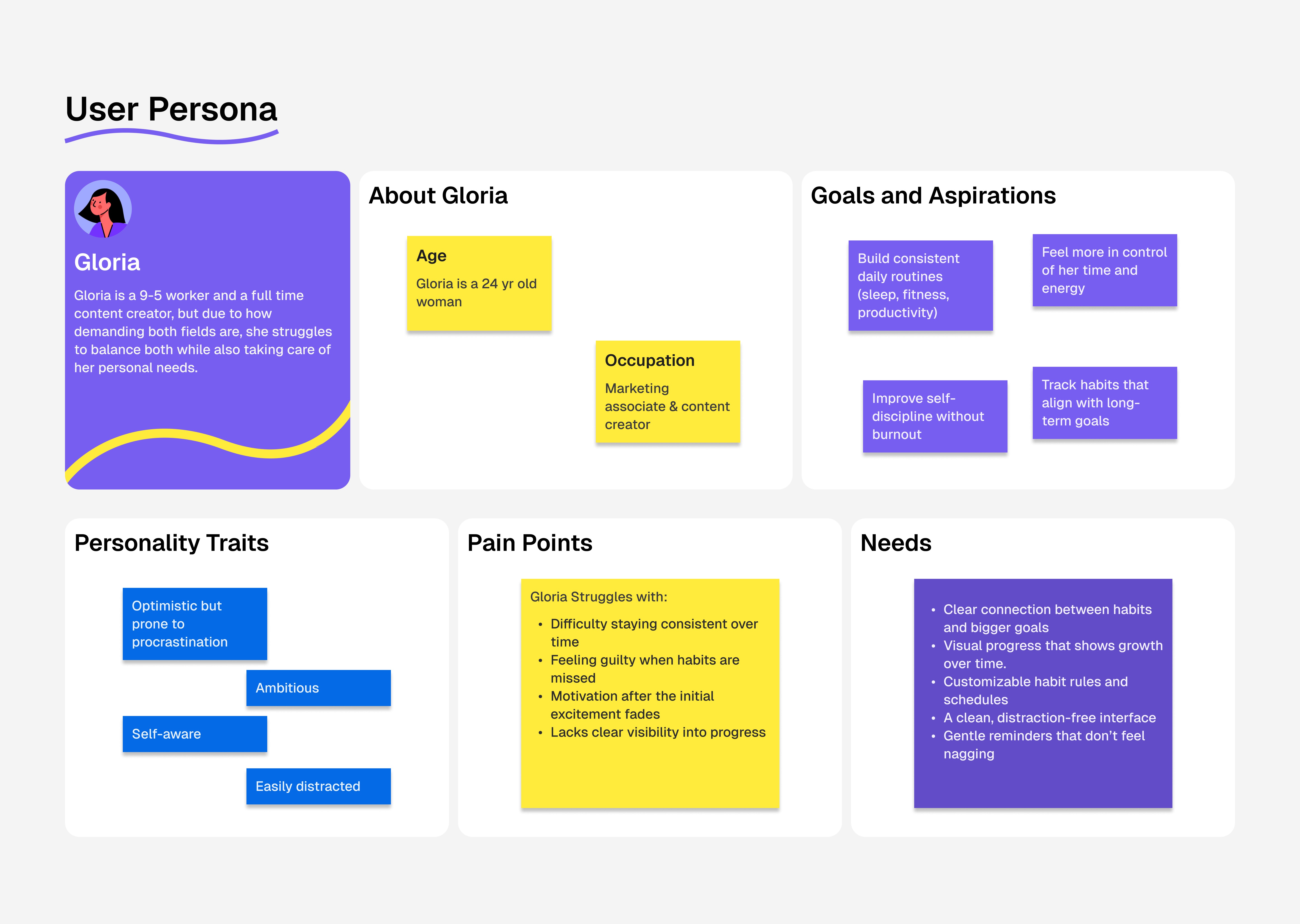
User Persona
Design process
The initial stage of this design was conducting user research to understand how goals and daily routines are currently approached. Through these conversations, a recurring theme emerged: people weren’t lacking motivation, they felt overwhelmed, unsure where to start, and often procrastinated as a result.
With these insights, I moved into defining the core problem. I broke down my findings into clear problem statements and user needs, focusing on reducing overwhelm and creating clarity around small, achievable actions.
Next, I explored potential solutions. I sketched ideas and brainstormed features that prioritized simplicity, consistency, and ease of use. The goal was to design an experience that felt supportive rather than demanding.
I then translated these ideas into low-fidelity wireframes. At this stage the focus was structuring the user flow, organizing information clearly, and minimizing cognitive load so users could move through the app effortlessly.
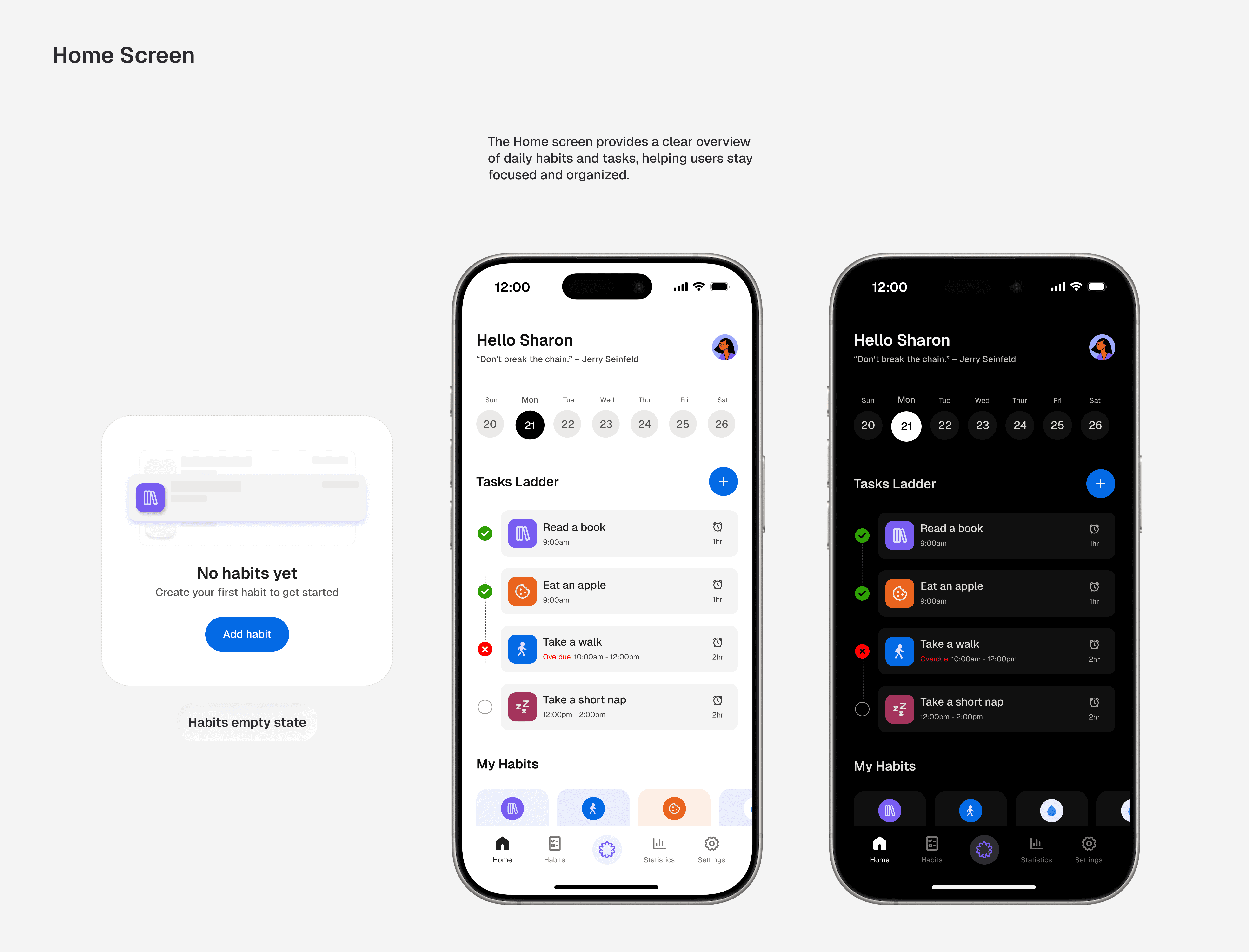
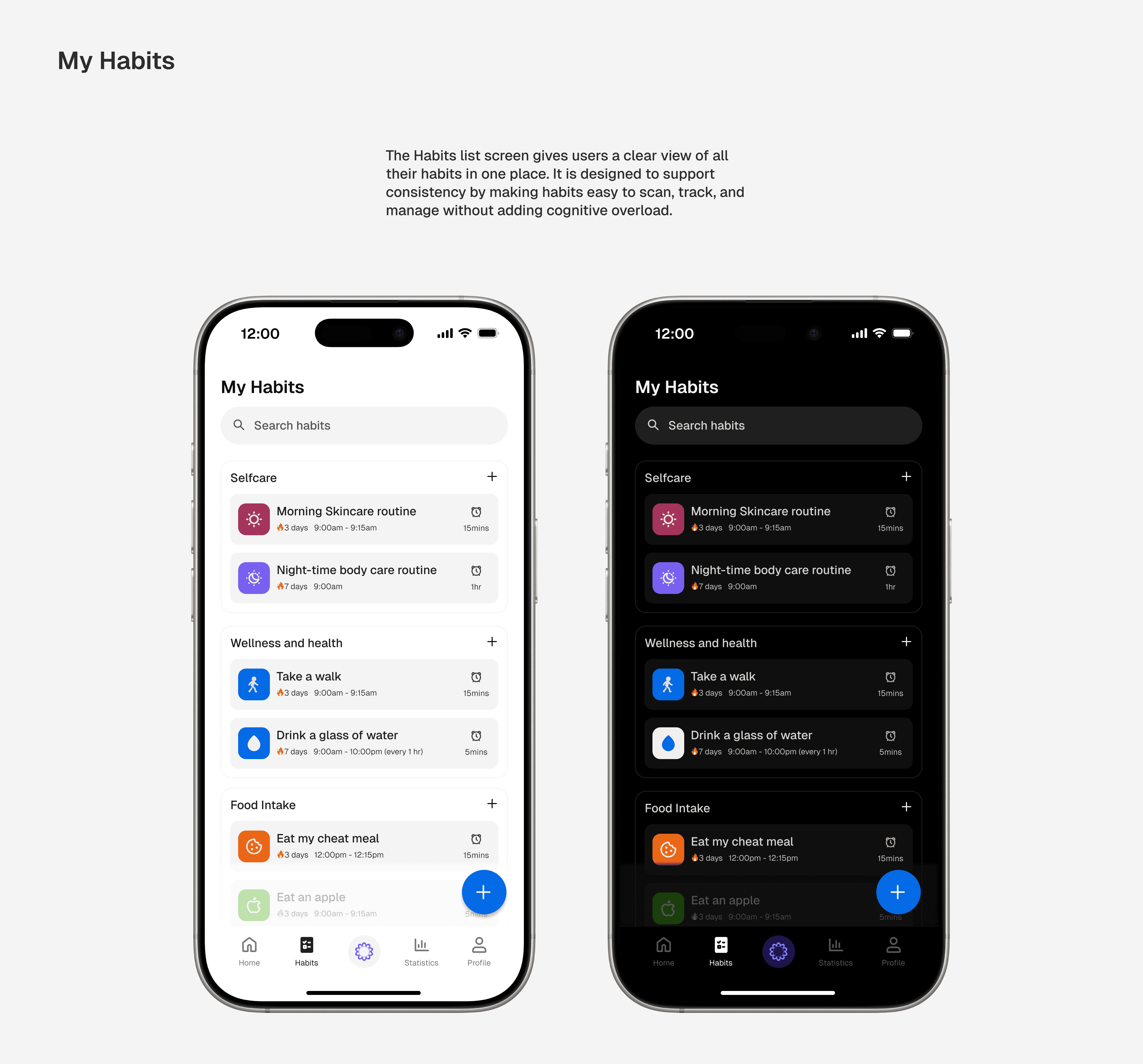
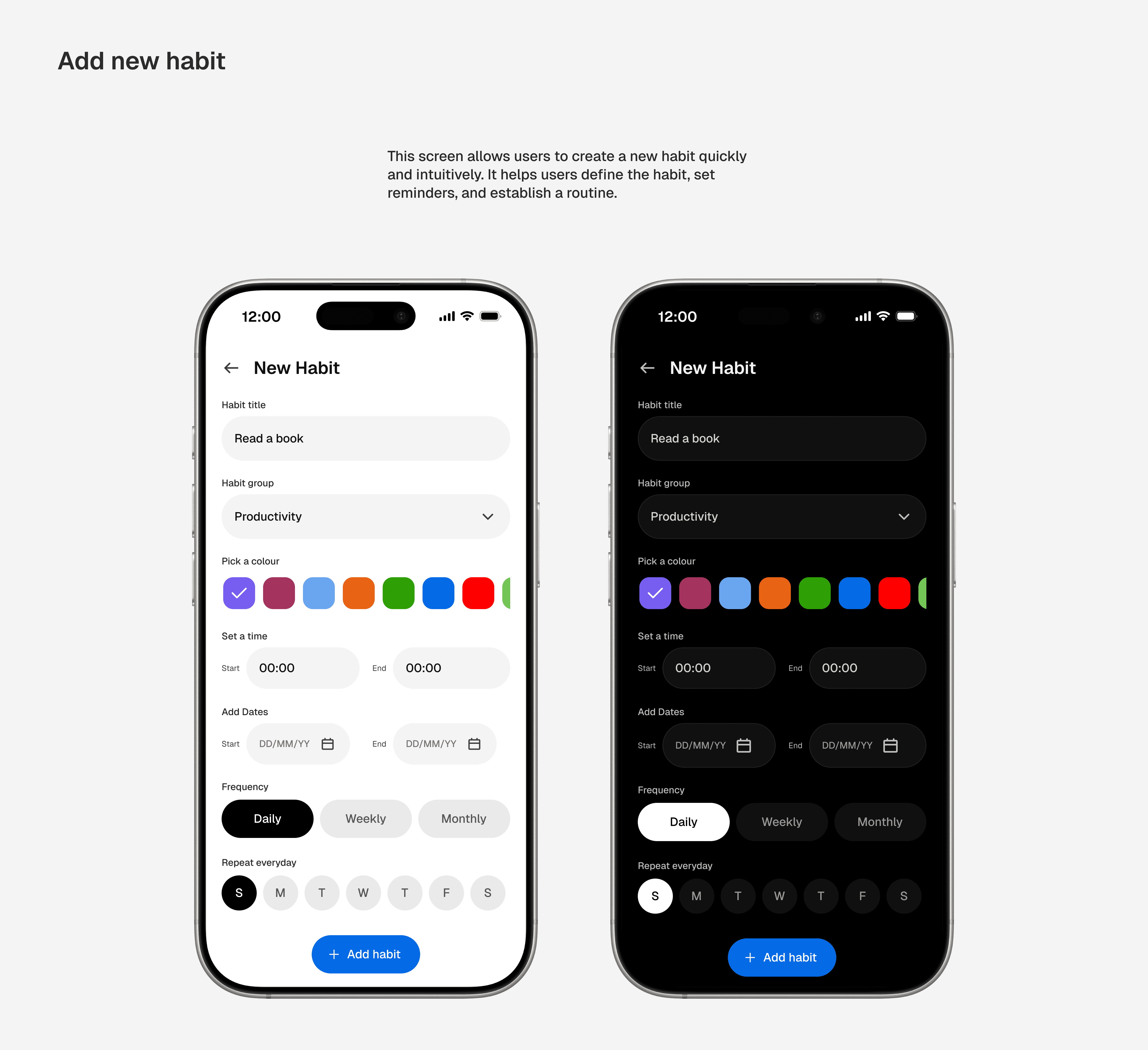
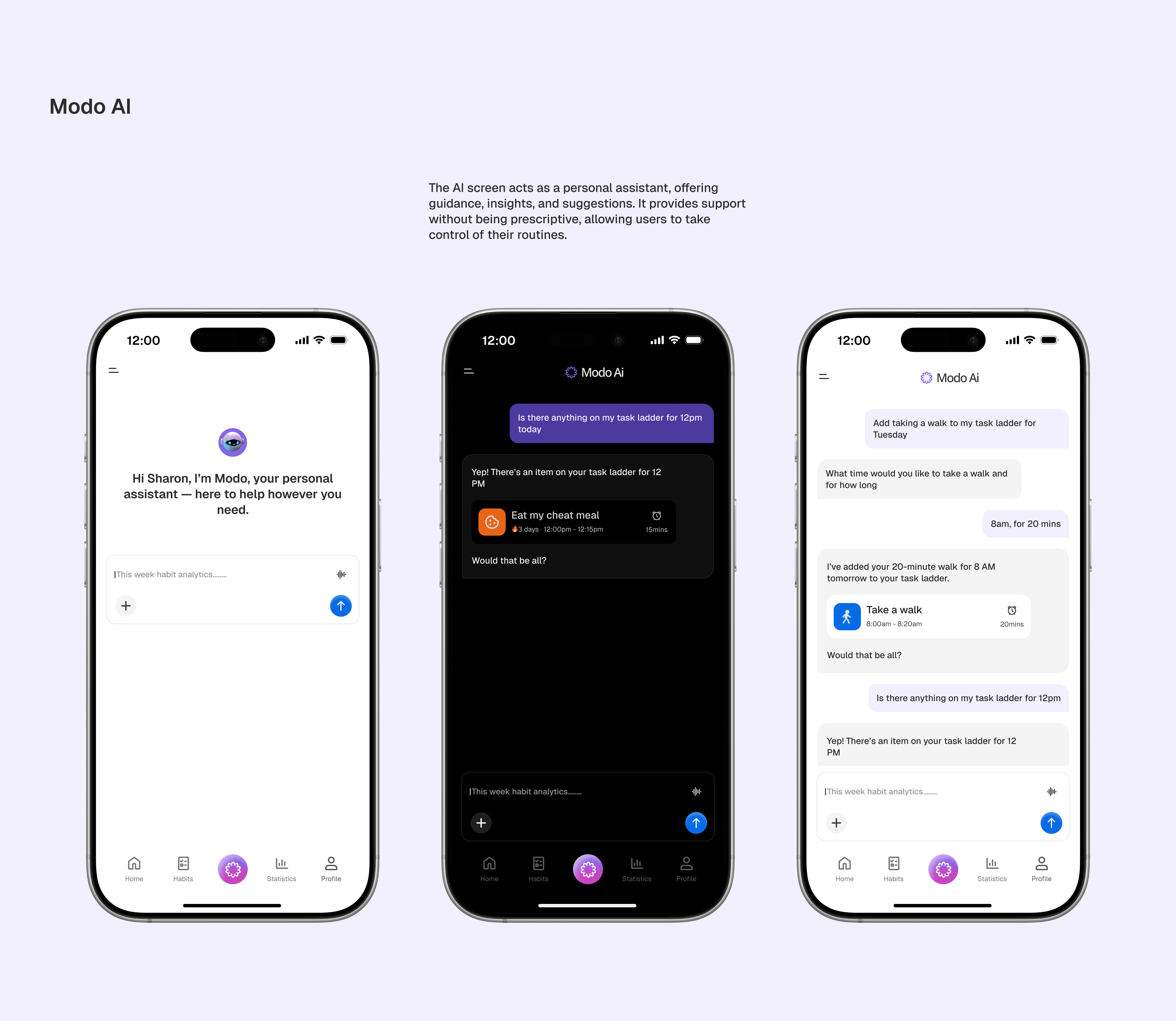
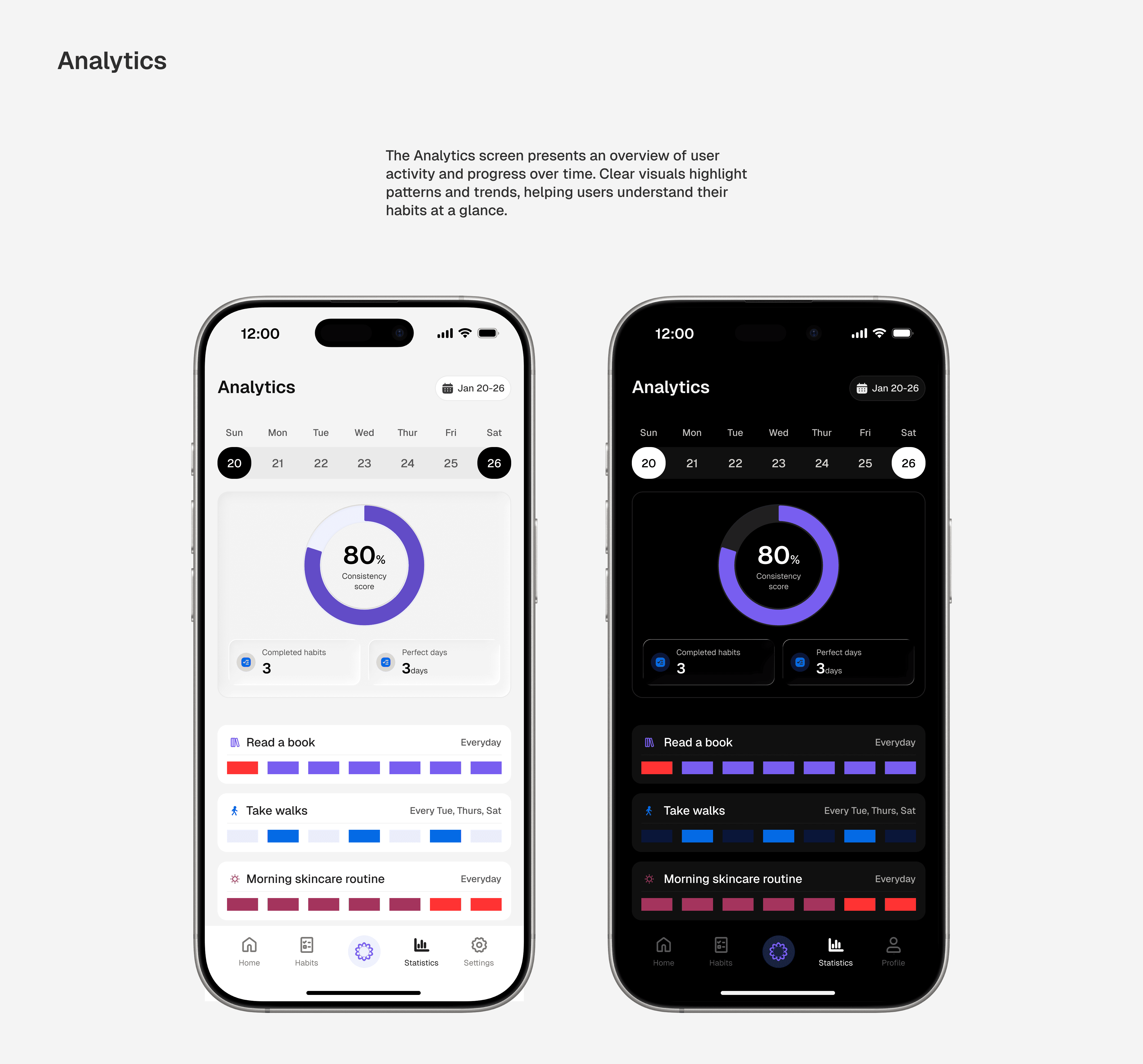
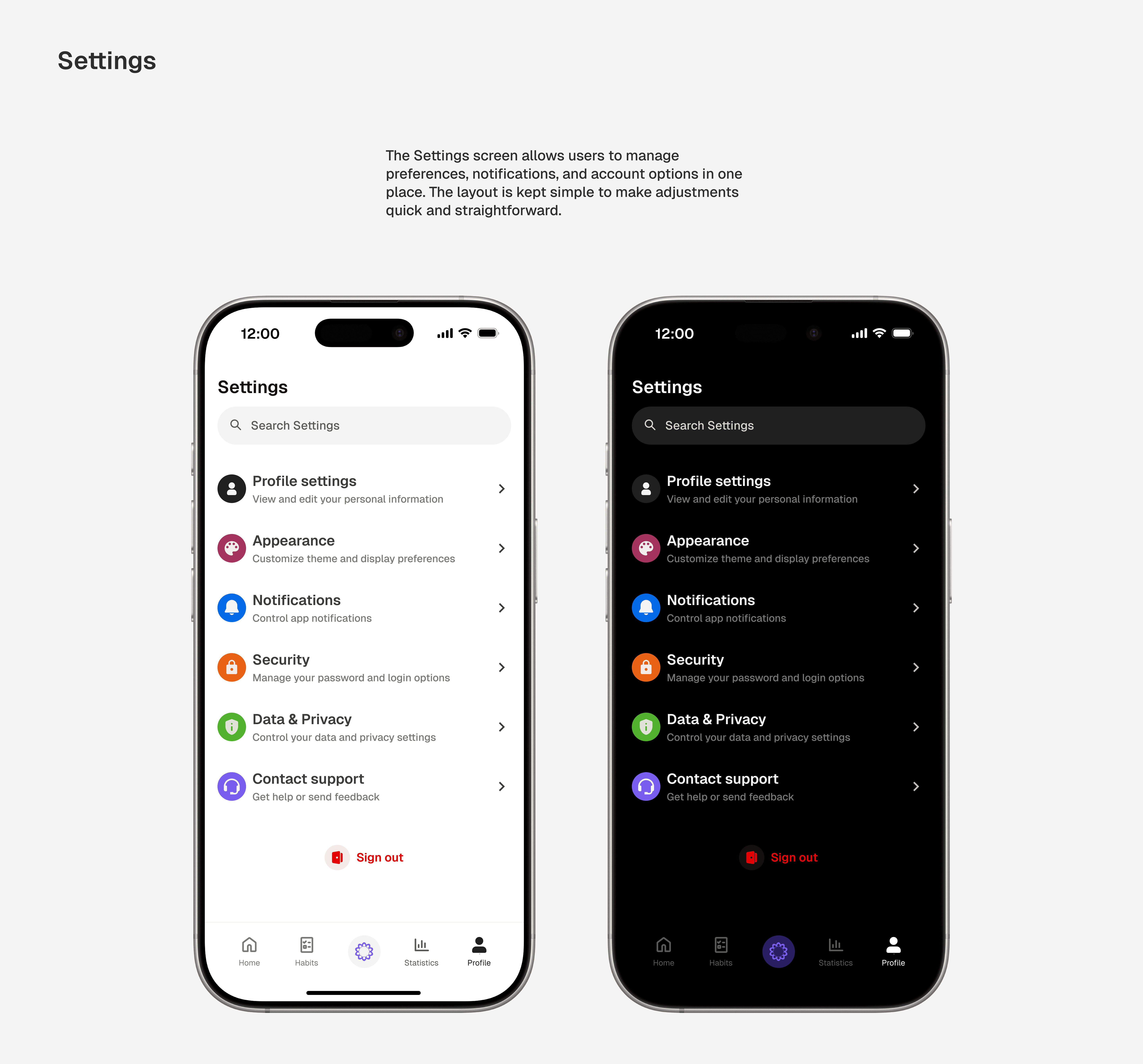
With the structure in place, the focus shifted to high-fidelity design. The interface was designed with both light and dark modes to adapt seamlessly across devices, using a minimal visual language to support calm, focused daily planning and habit tracking.
Finally, I brought the experience to life through an interactive prototype. I tested key flows, gathered feedback, and iterated on the design to ensure the app felt intuitive, motivating, and easy to use.
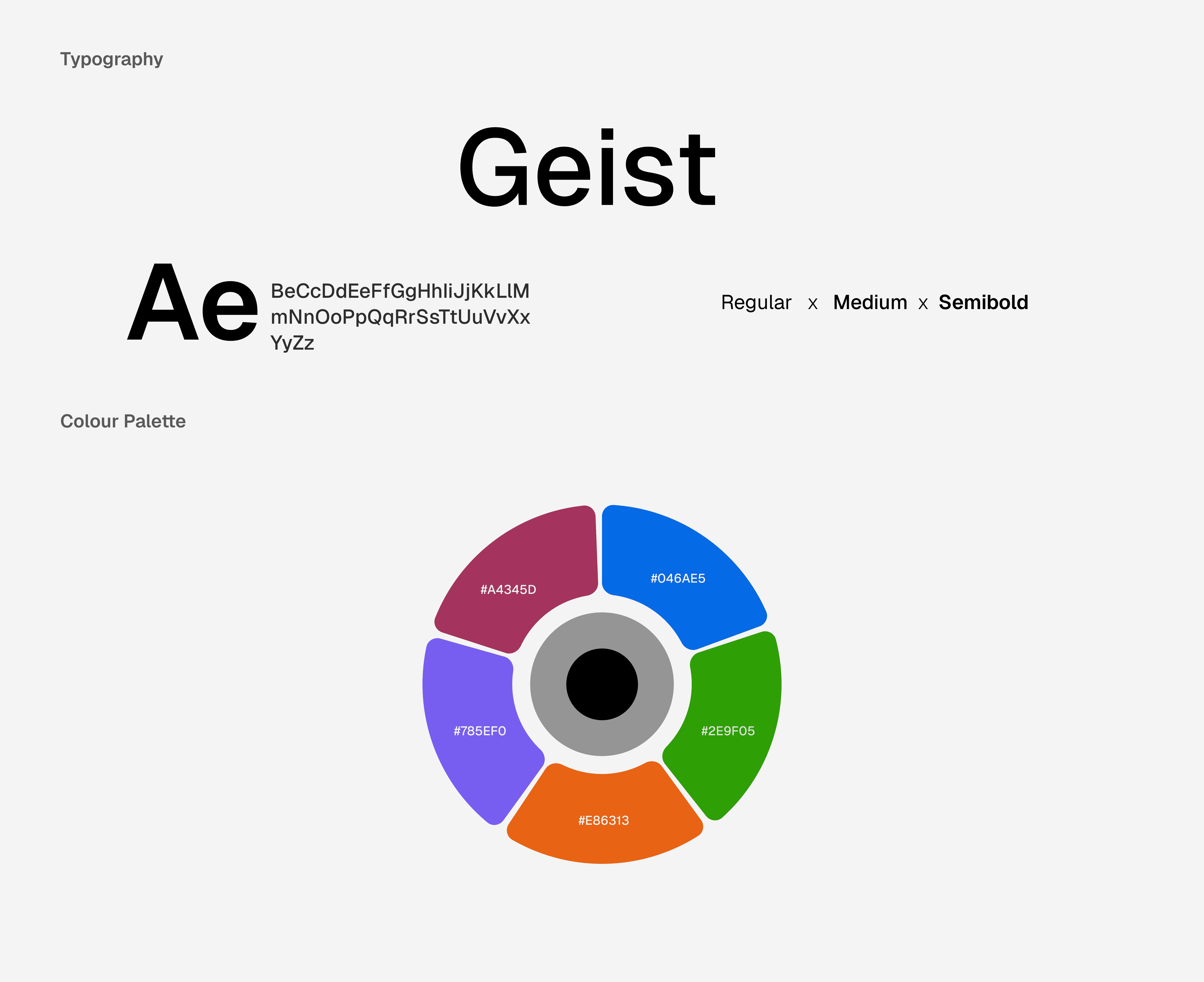
Typography and colours